Becoming a "Market Wizard" is an exercise in It requires the ego to be completely dismantled and replaced by a rigid, yet adaptive, set of rules. The "magic" isn't in a secret indicator; it’s in the terrifyingly simple ability to do what is necessary, even when it feels uncomfortable.
They cultivate a Zen-like detachment. A loss is not a failure; it is the "cost of doing business." A win is not a stroke of genius; it is the execution of a process. The False God of Prediction
The most profound lesson from these legends is that You have "wizards" like Bruce Kovner who trade off global macro-economic shifts, while others like James Rogers find value in the dirt of fundamental analysis, and some, like Ed Seykota, follow pure mathematical trends without ever looking at a balance sheet.
The common thread isn't what they see, but that they have found a methodology that aligns perfectly with their own personality. They don't fight the market; they fight their own urges to deviate from a system that works for them. Discipline as a Spiritual Practice
They are obsessed with the downside. While the novice dreams of what they can win, the Wizard is haunted by what they can lose. They survive because they treat every trade as a statistical event, never allowing a single "opinion" to jeopardize their capital.
The philosophy, popularized by Jack Schwager, is less about a specific trading system and more about the grueling, internal architecture of the human mind. To read the stories of these traders is to realize that the market is not a math problem to be solved, but a mirror that reflects one’s own psychological fractures. The Paradox of Methodology
AI responses may include mistakes. For financial advice, consult a professional. Learn more
For a Market Wizard, discipline is not just a habit—it is the entire game. They view the market as a chaotic ocean where the only thing they can control is their own boat.
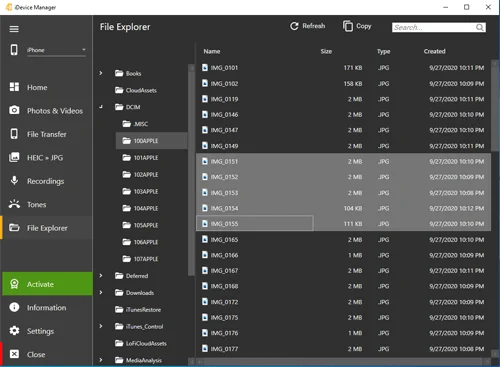
Transfer iPhone photos & videos to PC – easily, quickly, and without iTunes (Windows 10/11)

Transfer photos and videos from your PC to your iPhone – easily and securely
Synchronize Outlook contacts with iPhone – without iCloud or Exchange
Sync Windows 10/11 contacts with iPhone – automatically & locally
Transfer Google contacts to iPhone – easily import Gmail contacts
Import vCard (.vcf) contacts into your iPhone address book – compatible & fast
Becoming a "Market Wizard" is an exercise in It requires the ego to be completely dismantled and replaced by a rigid, yet adaptive, set of rules. The "magic" isn't in a secret indicator; it’s in the terrifyingly simple ability to do what is necessary, even when it feels uncomfortable.
They cultivate a Zen-like detachment. A loss is not a failure; it is the "cost of doing business." A win is not a stroke of genius; it is the execution of a process. The False God of Prediction
The most profound lesson from these legends is that You have "wizards" like Bruce Kovner who trade off global macro-economic shifts, while others like James Rogers find value in the dirt of fundamental analysis, and some, like Ed Seykota, follow pure mathematical trends without ever looking at a balance sheet.
The common thread isn't what they see, but that they have found a methodology that aligns perfectly with their own personality. They don't fight the market; they fight their own urges to deviate from a system that works for them. Discipline as a Spiritual Practice
They are obsessed with the downside. While the novice dreams of what they can win, the Wizard is haunted by what they can lose. They survive because they treat every trade as a statistical event, never allowing a single "opinion" to jeopardize their capital.
The philosophy, popularized by Jack Schwager, is less about a specific trading system and more about the grueling, internal architecture of the human mind. To read the stories of these traders is to realize that the market is not a math problem to be solved, but a mirror that reflects one’s own psychological fractures. The Paradox of Methodology
AI responses may include mistakes. For financial advice, consult a professional. Learn more
For a Market Wizard, discipline is not just a habit—it is the entire game. They view the market as a chaotic ocean where the only thing they can control is their own boat.