Anker Soundcore Flare 2 Review: An Impressive Portable Speaker
With warm sound, good volume, competitive pricing, and useful extras, Anker’s Soundcore Flare 2 is an impressive midrange portable speaker.

The job clock, in all its forms, is a signal of change. It serves as a stark reminder that efficiency, speed, and automation are redefining the value of human labor. While it poses challenges to traditional employment, it also forces a much-needed reevaluation of what it means to be productive, valuable, and in control of one's professional destiny in an increasingly automated world. To make this essay better fit your needs, tell me:
Based on current discussions regarding the future of work and technology, the "Job Clock" represents two distinct concepts: a literal tool for measuring productivity in computer simulations and a metaphorical, urgent tracking of AI-driven job displacement. The "Job Clock": Redefining Productivity and Employment
Opinion | All the Worst People Seem to Want to Be 'High Agency'
In technological contexts, a job clock is a fundamental component of batch-processing systems, meticulously measuring the exact time a job runs. This precise, technical clock ensures accountability and optimization, allowing for the tracking of "wait clocks"—how long a task sits in a queue—and "running times." In this setting, the job clock is a neutral, necessary tool for enhancing productivity.
The traditional, steady progression of a career—clocking in, building skills, and retiring—is rapidly evolving. In 2026, the concept of a "job clock" has taken on a dual meaning, bridging the gap between operational efficiency in computing and the alarming speed of artificial intelligence (AI) adoption. Whether viewed as a technical tool or a social omen, the job clock is a metaphor for the shifting landscape of human labor, where efficiency and automation demand constant adaptation.
This era of the AI job clock has brought about a significant shift in career mentality, with a rise in the "high agency" mindset—the desire to control one's own career path rather than relying on a traditional employer. As the job clock ticks faster, individuals are increasingly focused on building careers that offer security through personal ownership, rather than relying solely on the long-term, incremental buildup of a single company career.

Founder and editor of Too Many Adapters, Dave managed computer networks and tech support teams for 15 years before the desire to travel took over. In 2011 he sold whatever wouldn’t fit into a backpack and moved to Thailand to start life as a digital nomad. He’s been running this site alongside a small team of fellow experts ever since.
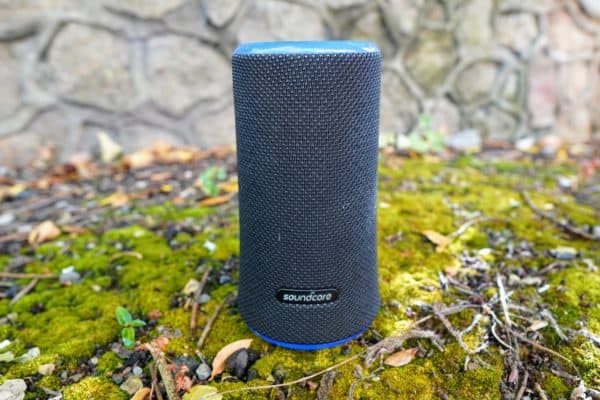
With warm sound, good volume, competitive pricing, and useful extras, Anker’s Soundcore Flare 2 is an impressive midrange portable speaker.

What you need to know about buying a SIM card in Italy.

Whether you’re taking up running for the first time or training for a marathon, these are the best apps to do it with.

Looking to stay connected in Brunei? Here’s everything you need to know about buying a local SIM card in the sultanate.
How to setup a local media server and watch your favorite shows in your RV (or anywhere else)

14 super-useful Google Maps tricks and secrets for travelers.
Note that comments are manually approved, so there will be a delay before they appear on the site. Please keep them polite.
My longtime favourite is Solomon’s Boneyard (see also: Solomon’s Keep!). I’ll have to check out Eternium because it might be similar — you pick a wizard that controls a specific element (magic balls, lightning, fire, ice) and see how long you can last a graveyard shift. I guess it’s kind of a rogue-lite where you earn upgrades within each game but also persistent upgrades, like magic rings and additional unlockable characters (steam, storm, fireballs, balls of lightning, balls of ice, firestorm… awesome combos of the original elements.)
I also used to enjoy Tilt to Live, which I think is offline too.
Donut county is a fun little puzzle game, and Lux Touch is mobile risk that’s played quickly.
Fun
Thank you great list. My job entails hours a day in an area with no internet and with very little to do. Lol hours of bordom, minutes of stress seconds of shear terror !
Some of these are going to be life savers!
I hope these help get you through! 😁
I’ve put hours upon hours into Fallout Shelter. You build a Fallout Shelter and add rooms to it Electric, Water, Food, and if you add a man and woman to a room they will have a baby. The baby will grow up and you can add them to an area to help with the shelter. Outsiders come and attack if you take them out sometimes you can loot the body to get new weapons. There’s a lot more to it but thats kind of sums it up. Thank you for the list I’m down loading some now!
Oh man, I spent so much time on Fallout Shelter a few years ago! Very fun game — thanks for the reminder!