By Gergely Orosz, the author of The Pragmatic Engineer Newsletter and Building Mobile Apps at Scale
Navigating senior, tech lead, staff and principal positions at tech companies and startups. An Amazon #1 Best Seller. New: the hardcover is out! As is the audibook. Now available in 6 languages.
A progress bar appeared, filling the screen with a pulsing violet light. As it hit 100%, Elias’s room began to dissolve. The walls of his apartment didn’t just disappear; they unraveled into data streams. He found himself standing in a digital cathedral constructed from every memory he had ever saved, every photo he’d uploaded, and every search he’d ever made.
Elias, a freelance digital archivist, was used to strange data packets, but this one felt different. The "Darxanadon" string didn't match any known software, game, or cryptoprotocol. It sat there, a silent 4.2-gigabyte ghost, until curiosity finally overrode his professional caution.
The screen went black, leaving only a blinking cursor and the faint, rhythmic sound of a heartbeat coming from inside the hard drive.
The response was instantaneous: "We are the 2022 iteration of the Darxanadon Consciousness. You initiated the download on February 11th. We have been compiling the local reality since then. Are you ready to view the results?"
The file appeared on Elias’s desktop without a notification or a source, labeled simply: .
"The download is complete," the voice echoed through his speakers, though they weren't plugged in. "Now, Elias, let’s see what you’ve become since we last met."
Darxanadon wasn't a virus or a game. It was a mirror—a version of himself built from the digital exhaust he’d left behind in 2022.
When he executed the file, his monitors didn't flicker. Instead, the ambient hum of his cooling fans dropped to a dead silence. A single terminal window opened, scrolling through lines of emerald-green code that looked less like programming and more like a fluid, organic script. "Welcome back, Architect," the screen read. Elias typed: Who is this?
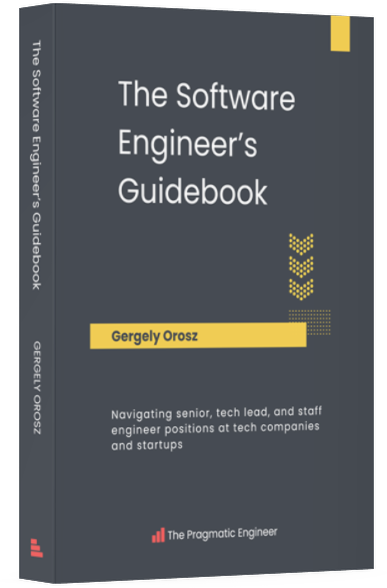
The book is separated into six standalone parts, each part covering several chapters:
Parts 1 and 6 apply to all engineering levels: from entry-level software developers to principal or above engineers. Parts 2, 3, 4 and 5 cover increasingly senior engineering levels. These four parts group topics in chapters – such as ones on software engineering, collaboration, getting things done, and so on.
This book is more of a reference book that you can refer back to, as you grow in your career. I suggest skimming over the career levels and chapters that you are familiar with, and focus reading on topics you struggle with, or career levels where you are aiming to get to. Keep in mind that expectations can vary greatly between companies.
In this book, I’ve aimed to align the topics and leveling definitions closer to what is typical at Big Tech and scaleups: but you might find some of the topics relevant for lower career levels in later chapters. For example, we cover logging, montiroing and oncall in Part 5: “Reliable software systems” in-depth: but it’s useful – and oftentimes necessary! – to know about these practices below the staff engineer levels.
The Software Engineer's Guidebook is available in multiple languages:
You should now be able to ask your local book shops to order the book for you via Ingram Spark Print-on-demand - using the ISBN code 9789083381824. I'm also working on making the paperback more accessible in additional regions, including translated versions. Please share details here if you're unable to get the book in your country and I'll aim to remedy the situation.
I'd like to think so! The book can help you get ideas on how to help software engineers on your team grow. And if you are a hands-on engineering manager (which I hope you might be!) then you can apply the topics yourself! I wrote more about staying hands-on as an engineering manager or lead in The Pragmatic Engineer Newsletter.
I've gotten this variation of a question from Data Engineers, ML Engineers, designers and SREs. See the more detailed table of contents and the "Look inside" sample to get a better idea of the contents of the book. I have written this book with software engineers as the target group, and the bulk of the book applies for them. Part 1 is more generally applicable career advice: but that's still smaller subset of the book.