
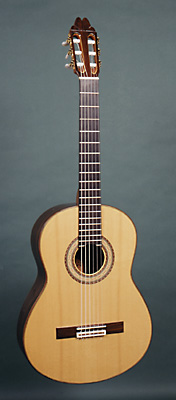
Welcome to the fantastic world of classical guitar. In this site, you will find classical guitar pieces, in midi format, for one and more guitars: actually 5641 MIDI files from 96 composers. Information on how to create midi files and a tutorial on the tablature notation system is presented. Images of ancient guitars provided.
|
|
At the start of the decade, the studio’s future was precarious. Post-war debt had left Disney in a fragile state, but the 1950 release of Cinderella acted as a financial and creative resurrection. It proved that the public still hungered for the "Disney Style"—lush, romantic, and technically superior animation. This success paved the way for a string of classics including Alice in Wonderland (1951), Peter Pan (1953), Lady and the Tramp (1955), and Sleeping Beauty (1959). These films refined the studio’s aesthetic, blending mid-century modern art influences with traditional storytelling, and cemented Disney's dominance over the American family's cultural imagination.
The culmination of this decade-long expansion was the opening of Disneyland in Anaheim on July 17, 1955. This was the first "theme park"—a radical departure from the seedy amusement parks of the era. Disneyland allowed fans to literally walk into the stories they had seen on screen. It represented the ultimate form of corporate synergy: the movies promoted the park, the TV show promoted the movies, and the park sold the merchandise that kept the cycle spinning.
However, Walt Disney’s greatest mid-century innovation was his early embrace of television. While other movie moguls viewed the "small box" as a threat, Disney saw it as a Trojan horse. In 1954, he launched the Disneyland anthology series, which served as a weekly advertisement for his upcoming projects. This was followed by the Mickey Mouse Club in 1955, which created a national obsession and turned the "Mouseketeers" into the first generation of televised child stars. Through TV, Disney wasn't just selling movies; he was selling a lifestyle and a brand that lived in the viewer's living room every day.
The 1950s served as the most pivotal decade in the history of the Walt Disney Company, marking a transition from a struggling animation studio into a global titan of integrated entertainment. By examining the decade through the lens of a "195x Disney" archive, we see a masterclass in brand expansion and the birth of modern synergy. This era was defined by three distinct pillars: the perfection of the feature-length animated musical, the conquest of the television screen, and the physical manifestation of imagination through Disneyland.
Composers are grouped in 6 pages: A-B;
C-F;
G-L;
M-O;
P-R; S-Z .
J.-S.
Bach , A.
Barrios Mangore , N. Coste
, M. Giuliani , F.
Sor and F.
Tarrega are on their own page
Click here
to listen to 20 great MIDI from the site
Composers in alphabetical order
At the start of the decade, the studio’s future was precarious. Post-war debt had left Disney in a fragile state, but the 1950 release of Cinderella acted as a financial and creative resurrection. It proved that the public still hungered for the "Disney Style"—lush, romantic, and technically superior animation. This success paved the way for a string of classics including Alice in Wonderland (1951), Peter Pan (1953), Lady and the Tramp (1955), and Sleeping Beauty (1959). These films refined the studio’s aesthetic, blending mid-century modern art influences with traditional storytelling, and cemented Disney's dominance over the American family's cultural imagination.
The culmination of this decade-long expansion was the opening of Disneyland in Anaheim on July 17, 1955. This was the first "theme park"—a radical departure from the seedy amusement parks of the era. Disneyland allowed fans to literally walk into the stories they had seen on screen. It represented the ultimate form of corporate synergy: the movies promoted the park, the TV show promoted the movies, and the park sold the merchandise that kept the cycle spinning. 195x Disney .txt
However, Walt Disney’s greatest mid-century innovation was his early embrace of television. While other movie moguls viewed the "small box" as a threat, Disney saw it as a Trojan horse. In 1954, he launched the Disneyland anthology series, which served as a weekly advertisement for his upcoming projects. This was followed by the Mickey Mouse Club in 1955, which created a national obsession and turned the "Mouseketeers" into the first generation of televised child stars. Through TV, Disney wasn't just selling movies; he was selling a lifestyle and a brand that lived in the viewer's living room every day. At the start of the decade, the studio’s
The 1950s served as the most pivotal decade in the history of the Walt Disney Company, marking a transition from a struggling animation studio into a global titan of integrated entertainment. By examining the decade through the lens of a "195x Disney" archive, we see a masterclass in brand expansion and the birth of modern synergy. This era was defined by three distinct pillars: the perfection of the feature-length animated musical, the conquest of the television screen, and the physical manifestation of imagination through Disneyland. This success paved the way for a string
Note to MIDI sequence contributors
Your submissions are welcomed.
Please send them by e-mail (end of text). Pieces
should bear the composer's name and be properly identified.(ex.: J.K. Mertz (1806-1856) Nocturne
Op.4 No.2.). The submissions
should bear information on the transcriber or arranger when available. The submitter's name
will appear beside the accepted submission.
This site exists primarily to showcase pieces written for the classical
guitar. Established and recognized transcriptions and arrangements (e.g.,
Tarrega, Segovia,..) of pieces written by non-guitar composers will also be given
high priority.
New compositions for the classical guitar are also welcomed. New
compositions that meet quality guidelines will be added to the site. For
new contributors, it would be appreciated if you would also submit several
pieces by known composers in addition to your own compositions. This will
help to expand the repertoire of established works for the classical guitar in
addition to expanding the repertoire of new music.
Last update: March 8 2026
Copyright François Faucher 1998-2025
 G.F.Handel's Sonata 2. Allegro
3.Adagio HWV368
G.F.Handel's Sonata 2. Allegro
3.Adagio HWV368